
 Kimberly ButlerSave this storySave this story
This story has been updated to include additional reporting and new details.
Joan Kron started working at Allure in 1991, at the age of 63. That first year, an assignment on plastic surgery consultations led Kron to get her own facelift. It was love at first lift, and Kron embarked on a 25-year-long, groundbreaking career in cosmetics procedure reporting, at a time when other magazines just weren’t covering the topic. She wrote a book on facelifts (LIFT: Wanting, Fearing and Having a Facelift), and made her directorial debut at age 89 with a documentary on plastic surgery called Take My Nose … Please!. Now, Kron is working on her second documentary, about Botox. Her latest book, The Renegade Housewives of Pop Art: A Memoir of the '60s is about her life in Pop Art, and comes out this fall. She was a driving force behind one of the country’s first Pop Art exhibits, and worked on projects with Andy Warhol, Roy Lichtenstein, and Robert Indiana. We sat down with Kron, now 98, to talk about her own facelifts and brow lift, and everything she learned along the way.
My first marriage, which lasted 21 years, was to a general surgeon. I used to watch my husband operate, in awe. Mostly abdominal surgery. I was a New Yorker, living in Philadelphia, and it was the 1950s. At that time, there was only one plastic surgeon in Philadelphia. I went to a lecture he gave and I distinctly remember my 20something self turning to the woman next to me as graphic slides of a facelift procedure flashed on the screen, and saying, "Not me. Ever.”
Fast forward to 1991, and I am a journalist covering the psychology of appearance for Allure. I was 63, the contributing editor at large, and a veteran journalist—I had been writing for New York Magazine, The New York Times, and The Wall Street Journal and had published three books. We had a weekly staff meeting to plan the next issue, and editor in chief Linda Wells began the meeting by saying, “I’m interested in whether plastic surgeons try to talk potential patients into having surgery they don’t need…even though most of our readers are too young to be interested in surgery. And I’ve already assigned it.” The chosen writer was 35.
After the meeting, I went to Linda’s office and said, “A 35-year-old is too young to understand how a woman feels about losing her looks. I’m the oldest person here. I was married to a surgeon. I'm not intimidated by doctors. And I’m one of the few writers among the staff old enough to need a facelift—not that I would ever want one. Please let me do this.” Linda said she wasn’t calling off the other writer, yet, but “Okay, why don’t you try it.”
The world of plastic surgery in 1991, much more so than today, was secretive. There was no Botox, yet, or cosmetic dermatology—all subjects we would eventually pioneer covering at Allure. There was no Bravo show about Housewives of New York or LA, no Botched on TV, no best-facelift surgeons lists in magazines or online. And celebrities were certainly not confirming the surgeon who did their facelift, or publicly sharing the CCs of their breast implants. So I asked a source—who knew Who had What work done When and Where—for recommendations. We now have so much information at our fingertips, but there’s still nothing better than a personal recommendation.
In a week I had all my appointments set up. My first consultation was with a doctor whom my source told me had done a facelift on a former first lady. When my name was finally called, there was no foreplay. The doctor had me stand facing the mirror of a small medicine cabinet over a tiny sink, while he stood behind me and pronounced my imperfections. And how he could improve them. The one I remember most was, "Oh dear, you haven’t seen your jawline in 15 years." And, “You’ll have to stop smoking.” I reminded him that in the questionnaire I filled out I explained that I had stopped smoking 30 years ago. He passed me on to his office manager. "That will be $19,500, plus anesthesia, plus hospital fees, plus private nurses.” (Inflation check: $19,500 would be the equivalent of over $40,000 today.) I did not set a date.
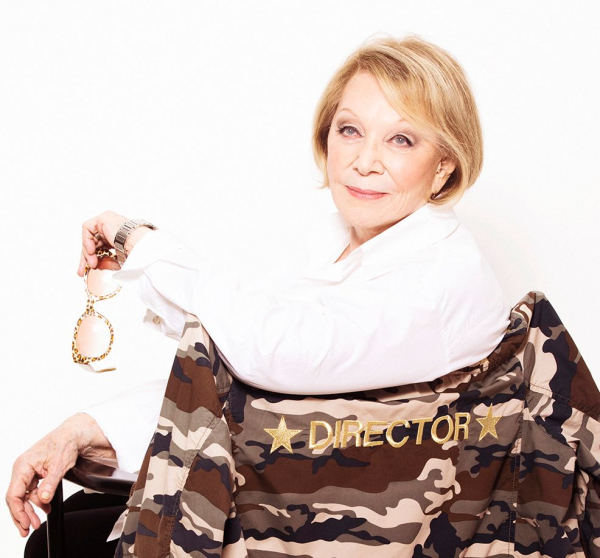
Joan Kron at 89, the year her first documentary film—Take My Nose… Please!—was released
Rosana Rosales
Three appointments later, however, I had crossed the line from stealth journalist to consumer. At the end of my fourth consultation, I signed up for a $15,000 facelift and eye lift, and a lip peel. My non-medical second husband, an advertising executive, said, “What are you doing? You said you didn’t want this.” And I said, “I think I need this.” And he said, “Well, this is your caper, Joan,” meaning he was not paying for it. And I said, “I have some savings. I’ll take care of it. Don’t worry.”
Today, I probably wouldn’t have been able to take care of it, as we see some facelift prices soar close to—or sometimes far past—six-figures. When Kris Jenner’s team confirmed last year that her much-discussed facelift was performed by New York City surgeon Dr. Steven Levine, reported cost estimates ranged from $150,000 to $300,000. (I will note that operating on a celebrity can take more time in conversations with their teams and logistics—and time is money.) On the West Coast, San Diego surgeon Dr. Amir Karam is just one example of a doctor whose facelifts can cost up to $200,000. Personally, I don’t get it. Facelift surgeons are doing more or less the same work they did decades ago—the exponential price increases don't track for me. As interest and education and openness around facelifts has grown, they’re also becoming less accessible and that’s a shame. I’m grateful that 35 years ago, I could go to a great New York City surgeon on a journalist’s salary. (And even though I was a plastic surgery reporter at the time, my accountant was clear: “You can't deduct this.”) If the price had been anywhere close to the 1991 equivalent of $100,000, this story would be: I’m 98 and I’ve Had Zero Facelifts.
Wanting a facelift is between you and your mirror. Opting for one is a decision that inevitably invites the opinions of others. After I scheduled this surgery, I heard everything from “You're beautiful. Why?” (my stepchildren) and “You don't need this" (coworkers) to “I regret that I never did it” (my mother) and “You'll love it, but don’t sign your name to the article about it” (my agent). Prepare yourself. Everybody has an opinion.
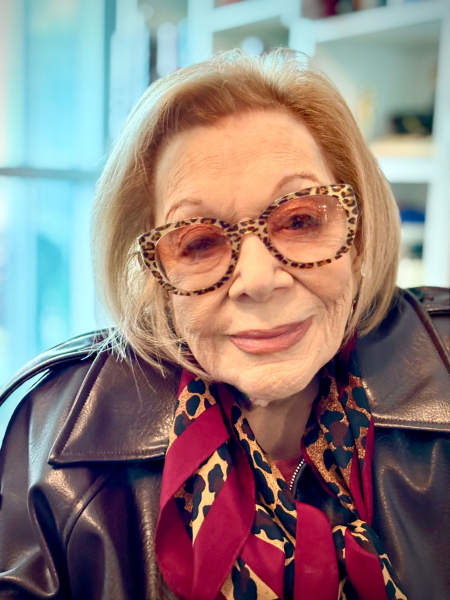
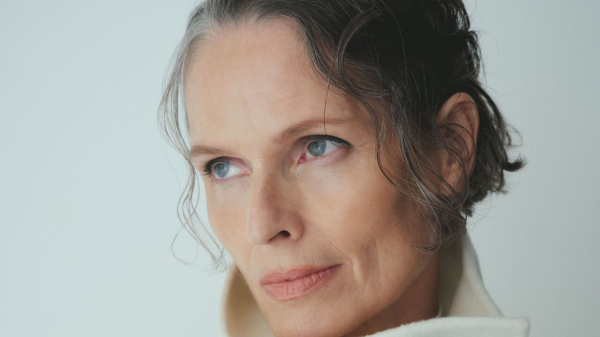
Kron at 98, the year she will publish her fifth book, The Renegade Housewives of Pop Art: A Memoir of the ’60s, with Pointed Leaf Press
Carlos Cruz
A few months later, I was recovering at New York’s premier plastic surgery facility—Manhattan Eye, Ear, & Throat Hospital—bruised, swollen, and sedated after a three-and-a-half-hour operation. My husband stood at the foot of my bed, shaking his head and muttering, “You couldn’t pay me to have this done.” My mother came to see me and said, “Is this Joan?” The first night you’re bandaged, though not as much as people might think. It’s not like Liz Taylor in Ash Wednesday, where she had mummy-like wrapping around her head for a month.
The surgery was an in-patient procedure because my internist said that was safer for someone over 60. Today you’d most likely recover in a hotel with a nurse. It’s important to have a nurse the first night no matter where you recover. You don’t want a girlfriend taking care of you. You will want a professional monitoring your blood pressure and checking for a hematoma, which is bleeding under the skin, for those first 24 to 48 hours. You may be unrecognizable the first couple of days, and most friends or loved ones won’t want to see you looking like that. They only want to see the “after.”
Prepare yourself. Everybody has an opinion.
Once I got home, I took pictures every day with a Polaroid camera, and within two weeks, I was flabbergasted at how great I looked—a little bit of swelling can actually be very flattering. I had graduated from Tylenol with codeine to plain Tylenol. The change in my appearance was remarkable. I was still myself, but a 10-years-younger-looking version of myself. The result, for me, was worth the temporary aches and sleeping propped up—and yes, the money. Two weeks after my facelift, I had a family celebration for a new step-grandchild. A relative of my husband’s ex-wife walked in and said, “I don’t remember you being this good-looking.”
What is the best age to have your first, and perhaps your only, facelift? There’s no agreement because everyone ages differently. In my opinion—and perhaps some doctors will disagree—you shouldn’t start until you see some unpleasant signs of aging. As they say, if it’s not broke, why fix it? There seems to be a trend now in women getting facelifts far younger than I did—in their 40s or even 30s—but I don’t believe in doing it proactively, or at the first signs of laxity. I'm glad I waited until I actually had something to lift. Not to mention, I've ultimately had three facelifts and I started at 63! This surgery doesn't stop time, it just sets the clock back a few years.
And what’s the best kind of facelift? Much of the recent social media hype around facelifts has centered on the deep plane technique, but when I was covering the plastic surgery beat, a deep plane had a very long recovery and could look overdone. Nowadays, the best surgeons often use combinations of techniques and it's really impossible for observers to tell what exactly has been done. You’d have to read the operative notes. Ultimately, you want a doctor who has experience in all techniques and gives you what you need in each part of the face. I advise consultations with several doctors to get different opinions on so-called new techniques. Do they stand the test of time? My surgeries were SMAS lifts, the same kind Kris Jenner likely had decades later—and I agree with Jolene Edgar’s reporting in Allure last year: Jenner makes a great case for keeping plastic surgery old-school.
After that first facelift, if someone remarked on my refreshed look, I never lied or denied it. I usually said, matter-of-factly, “I had a facelift.” In return for my honesty, I was rewarded with an outpouring of confidence from women and men, who were considering cosmetic changes and needed a sounding board.
If someone remarked on my refreshed look, I usually said, matter-of-factly, “I had a facelift.”
No matter how much you want it, the prospect of a facelift evokes fear, shame, and embarrassment. Perhaps the hardest thing about cosmetic surgery is admitting that you find something about yourself unacceptable, that you don’t measure up, and worse, that you care. How uncool!
Nearly five years after that first lift, when a recurring sinus condition required an operation under general anesthesia, I reasoned, why not have a few aesthetic adjustments on areas I hadn’t dealt with before? In my experience and after talking to hundreds of women, once you have plastic surgery all the fears you had beforehand—and everyone has them—drop away. So, after that first time, you do have to be careful not to be too open to plastic surgery.
But I hadn't had a brow lift during the first surgery because you would have a scar in your hairline from ear to ear and could lose hair along the scar line. A few years later, though, a new scarless endoscopic brow lift had been invented. You would just have five little incisions and they would heal over—today, I have no idea where those scars are; they are completely gone.
So I chose to have an endoscopic brow lift to raise my brow slightly and smooth out the scowl etched there, making me look angry when I’m not, and a minor refinement on my nose. I remember a doctor I interviewed later saying, “If you do one thing, you get a good result. If you do two things, you get a better result. Do three things, you get a great result.” One important note, though—do too much at once and you're really lengthening the amount of time you're under anesthesia, which can increase risk and should be discussed with your surgeon.
For round two, I was not curious to try another surgeon. My original facelift doctor had done well by me. Why switch? Many women feel the Astroturf is greener elsewhere, even going to another city for a facelift. And it’s fine to travel for the best care, but today, with excellent doctors in every part of the country, you shouldn’t have to go that far to find a good plastic surgeon. Wherever you are, you'll want to make sure your surgery is done in an accredited operating room. My anesthesia was administered by an MD anesthesiologist, but there are also many nurse anesthetists that work regularly with plastic surgeons. At the end of the day, just don't shop by price for anesthesia, that's dangerous—shop by experience. [Editor’s note: Kron wrote an Allure article on “Finding Dr. Right—and Avoiding Dr. Wrong” with tips for choosing a surgeon.]
No matter how much you want it, the prospect of a facelift evokes fear, shame, and embarrassment.
Two days after the second surgery, I went home from the hotel where I had been recovering. I was in my own bed, propped up on a stack of pillows, eating Jello-O. I heeded the advice a good friend gave me before my first facelift and had stocked the refrigerator with soft, low-sodium food. Salt increases swelling. I once saw someone bringing in Chinese food to a recovery facility. I couldn’t believe it.
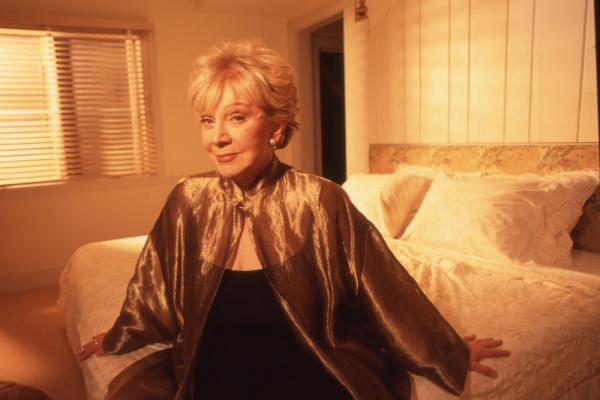
Kron in her late 60s, after her second facelift
Kimberly Butler
Sleep was fitful the first few nights because I had packing in my nose and, as the pain meds wore off, I had unexpected pain in the top of my head from the endoscopic brow lift; it felt like a brick had fallen on my head. The pain subsided gradually over a few weeks.
Soon after, my husband and I were at our weekend house about to leave for a party, and I distinctly remember standing at the front door and he looked at me—and mind you, he had not been withholding comments during the whole recovery period—and said, “Oh my God. You look fabulous!” He finally approved.
After my husband died in 2005 from a long illness, I was ready for another uplift. It was a shorter operation and the recovery was easier this time. And I don’t apologize for it. I’ve had people say to me, “When I’m 60, I won’t care.” I was almost 80, and I did care. The feminist line is, “We've earned these wrinkles. We don't want to erase them.” Well, I’m a feminist, but I don’t believe in telling people what to do with their bodies.
I’ve had people say to me, “When I’m 60, I won’t care.” I was almost 80, and I did care.
To have work done or not is a personal decision, but I can tell you I’ve been consulted, very quietly, about plastic surgeons by some well-known feminists who were opposed to cosmetic surgery on the record, but off the record, felt differently.
Frankly, I don’t need to look at the wrinkles and sad eyes on my face and be reminded of every painful event in my life.
Cosmetic surgery isn’t for everyone. And I’m not advocating it, one way or another, for anyone but myself. It’s your decision. A facelift won’t transform you into any of the icons you admire. It won’t change your personality. It won’t restore your youth. But it can make you a fresher version of yourself and provide you with a sense of control—and that may give you more confidence.
I’m 98 now, and of course, I can see that I’ve aged, but I can also see that I look less, how to say this—world-weary—than other women around my age. Honestly, if I hadn't had those facelifts, I don't know if I would have been able to keep working—directing, producing, writing—until I'm almost 100. When people can’t quite decide how old you are, they treat you differently. I’m not a philosopher, but I think it gives them hope. Whatever. If I’m going to live as long as my mother, who lived to almost 106, I don’t regret having had three facelifts. I like to say I’m not aging gracefully. I’m aging dis-gracefully.


Leave a Reply